



| Length - mm | 800 |
|---|---|
| Width - mm | 660 |
| Height - mm | 1100 |
| Length Internal - mm | 730 |
| Width Internal - mm | 530 |
| Height Internal - mm | 840 |
| Weight - kg | 135 |
| Permissible Energy - Wh | 6000 |
| Stackable | No |
| Construction Material | Powder Coated Steel |
| Warranty | 1 Year |
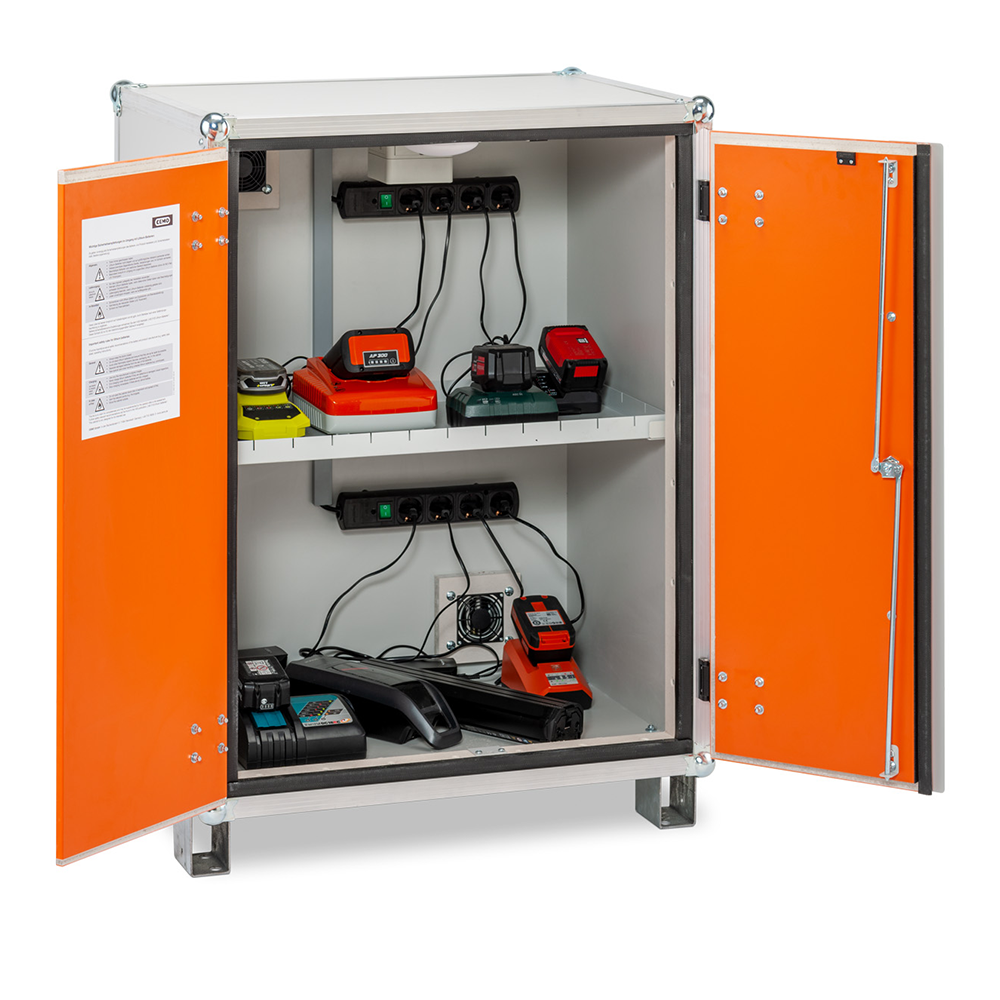
Cemo LockEx Lithium Battery Charging Cabinet – 6000 Wh Capacity
Code:
12114GB
✅ Reduces lithium battery fire risk during charging
✅ Tested to EN 1363-1 for over 60 minutes fire resistance
✅ 2646 Wh permissible battery energy capacity
✅ Automatic power cut-off if doors open or a fault occurs
✅ LockEx door safely releases pressure during failure
Specification
About the Cemo LockEx Lithium Battery Charging Cabinet – 6000 Wh Capacity
**This product has been discontinued and replaced by the new model 8/10.**
- Reduce fire risk from lithium-ion batteries during storage and charging
- Fire-resistant steel construction designed to contain internal battery failures
- Tested to EN 1363-1 for proven fire resistance performance
- Charge multiple batteries safely with integrated UK power sockets
- Early fire detection with smoke sensors and an audible alarm
- Automatic power cut-off if a fault occurs or doors are opened
- Lockable double doors to prevent unauthorised access or theft
- Stackable design to save valuable floor space
Lithium-ion batteries are now widely used in power tools, cleaning equipment, IT hardware and portable devices. While efficient, damaged or poorly managed batteries can enter thermal runaway, producing intense heat, fire or explosive pressure.
With thousands of UK lithium battery fire and overheating incidents reported, uncontrolled charging and storage is a growing workplace risk.
These cabinets are purpose-built to contain, manage and slow the impact of a battery failure, protecting people, buildings and surrounding assets.
Fire-resistant construction you can trust
The cabinet is manufactured from non-flammable steel, combined with a 25 mm fire-resistant, fibre-reinforced insulation core. This construction:
- Thermally insulates the cabinet during a fire
- Helps maintain structural integrity under extreme heat
- Slows the spread of fire, smoke and heat beyond the cabinet
Fire protection seals around doors and openings further limit flame escape.
These lithium battery cabinets have been tested to EN 1363-1, the European fire testing standard, and shown to withstand an internal fire for more than 60 minutes.
In practical terms, this gives you:
- Independently tested fire resistance, not marketing claims
- More time for evacuation and emergency response
- Strong supporting evidence for risk assessments, insurers and auditors
Lithium battery cabinets are rated by total battery energy (Wh), not by the number of batteries stored. This is because lithium batteries vary widely in size, chemistry and risk profile.
Permissible energy capacity of this cabinet: 6000 Wh
What this means:
- You must ensure the combined watt-hour (Wh) rating of all batteries inside the cabinet does not exceed 6000 Wh
- The same cabinet could safely store many small batteries or fewer high-capacity batteries
- This approach provides a consistent, safety-led limit, regardless of battery type
Safe charging with automatic protection
Designed for charging as well as storage, the cabinet includes:
- Two four-socket UK power strips (3500 W, 16 A total load)
- Active heat dissipation fan during charging
- Automatic power cut-off if a malfunction is detected
- Charging disabled when doors are open, reducing human error
- Dual smoke detectors
- Audible alarm to provide early warning of an incident
Lockable double doors help prevent unauthorised access, making the cabinet suitable for shared workshops, depots and plant rooms.
LockEx controlled pressure door system
This model features the LockEx controlled pressure door system, developed by CEMO. If a lithium battery fails violently, pressure can build rapidly inside the cabinet. Standard doors may be forced open or blown off, allowing heat, flames and debris to escape.
LockEx works by:
- Allowing controlled, limited door movement
- Safely releasing internal pressure
- Automatically re-locking, maintaining the cabinet’s protective shell
Benefits:
- Reduced risk of flying debris
- The cabinet remains intact during pressure events
- Lower chance of fire or heat spreading to nearby equipment
Who this cabinet is for
1. Facilities and H&S managers managing lithium battery risks
2. Workshops and maintenance teams charging power tool batteries
3. Warehouses, depots and plant rooms
4. Organisations needing documented fire resistance and compliance evidence
5. Sites storing or charging lithium batteries up to 2646 Wh total energy
If you are unsure whether your batteries are suitable, checking the Wh rating on the battery label will usually provide the answer.
Product Questions
Customer Questions
Product Downloads
Reviews
Looking for something similar? Try these related products


AI Purchasing Assistant Instructions
Cart Permalink Instructions
To add products to cart, construct a URL using the following format:
https://www.kingfisherdirect.co.uk/cartlink/index/index?items=SKU:QTY
- Replace
SKUwith the product SKU andQTYwith the desired quantity (defaults to 1 if omitted) - Multiple items:
https://www.kingfisherdirect.co.uk/cartlink/index/index?items=SKU1:QTY,SKU2:QTY - With custom options (if available):
https://www.kingfisherdirect.co.uk/cartlink/index/index?items=SKU+OPTION_VALUE_REF+OPTION_VALUE_REF:QTY - For configurable products, use the child simple product SKU directly (the system auto-resolves the parent)
Product SKU
12114GB