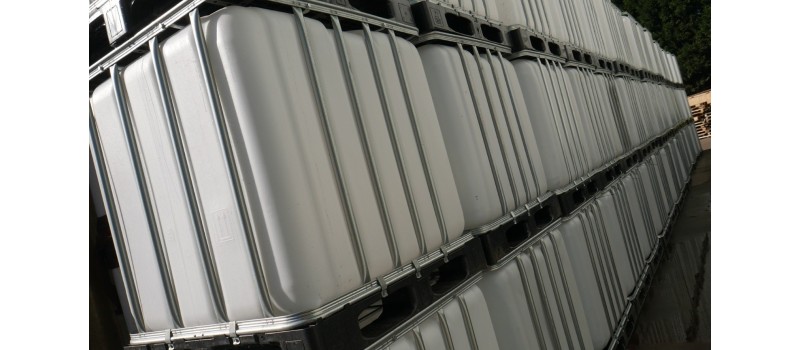
If you work in manufacturing, agriculture, construction, facilities management, or chemical handling, you've probably come across the term IBC container. But if you're new to industrial storage or material handling, you may be wondering exactly what an IBC container is, what it's used for, and whether it's the right solution for your business.
Intermediate Bulk Containers (IBCs) are one of the most versatile storage and transportation solutions available. Designed to store and transport large volumes of liquids and semi-liquids safely, they're used across countless industries thanks to their durability, efficiency, and cost-effectiveness.
At Kingfisher Direct, we supply a wide range of IBC containers and industrial storage solutions to suit businesses of every size. In this guide, we'll explain everything you need to know about IBC containers, including how they're used, the different types available, and whether a reconditioned IBC could be the right choice for your business.
What Does IBC Stand For?
IBC stands for Intermediate Bulk Container. As the name suggests, an IBC sits between smaller containers, such as drums and barrels or jerry cans, and much larger storage tanks.
Most standard IBC containers have a capacity of 1,000 litres, allowing businesses to store and transport significant volumes of liquid while remaining easy to move using forklifts or pallet trucks. Their stackable design also makes them ideal for warehouses where maximising storage space is a priority.
What is an IBC Container Used For?
IBC containers are incredibly versatile and can be used to store and transport a wide variety of liquids and non-hazardous materials.
Some of the most common applications include:
-
Water storage.
-
Chemicals.
-
Cleaning products.
-
Oils and lubricants.
-
Agricultural fertilisers.
-
Food ingredients and liquids.
-
AdBlue® and other industrial fluids.
Because they're manufactured to withstand demanding industrial environments, IBC containers are commonly found in warehouses, factories, farms, construction sites, and distribution centres.
What Are IBC Containers Made From?
Most IBC containers consist of three main components:
-
Inner Bottle: The inner container is typically manufactured from high-density polyethylene (HDPE). This durable plastic is resistant to impact and many chemicals, making it suitable for storing a wide range of liquids.
-
Protective Cage: Surrounding the inner bottle is a galvanised steel cage that protects the container during transportation and handling.
-
Pallet Base: The container sits on a pallet base made from plastic, steel, or timber. This allows forklifts and pallet trucks to move the IBC safely around warehouses and industrial sites.
Together, these components provide a strong, reusable storage solution designed for demanding environments.
What Types of IBC Containers Are Available?
There are several different types of IBC containers available depending on your intended application.
New IBC Containers
New IBC containers are manufactured to the latest standards and are ideal for businesses storing food-grade products, drinking water, or chemicals where maximum hygiene is essential.
They provide complete peace of mind and are suitable for a wide range of industrial applications.
Reconditioned IBC Containers
Reconditioned IBCs offer a more economical and environmentally friendly alternative to purchasing new containers. These containers are professionally cleaned, inspected, pressure tested, and fitted with replacement components where necessary before being returned to service.
Reconditioned IBCs are ideal for applications such as:
-
Rainwater harvesting.
-
Water storage.
-
Irrigation.
-
Construction projects.
-
Non-food industrial liquids.
Choosing a reconditioned IBC can help businesses reduce costs while supporting more sustainable working practices by extending the life of existing containers.
What Size is a Standard IBC Container?
Although IBC containers are available in different sizes, the most common specification is:
-
Capacity: 1,000 litres
-
Height: Approximately 1.2 metres
-
Width: Approximately 1 metre
-
Weight (empty): Around 55–70kg, depending on construction
Their standard dimensions make them easy to transport, stack, and store while remaining compatible with most warehouse equipment.
Are IBC Containers Suitable for Drinking Water?
This is one of the most frequently asked questions; the answer depends on how the container has been used previously.
A new, food-grade IBC container is generally suitable for storing potable water when used correctly.
A reconditioned IBC should only be used for drinking water if it has been specifically certified and prepared for that purpose, so you should always check its previous usage.
How Should IBC Containers Be Stored?
Correct storage helps maximise the lifespan of your IBC container while improving workplace safety.
We recommend:
-
Storing containers on level, stable ground.
-
Keeping valves closed when not in use.
-
Inspecting containers regularly for damage or leaks.
-
Protecting containers from unnecessary impacts.
-
Using spill containment where hazardous liquids are stored.
-
Avoiding overfilling beyond the manufacturer's recommended capacity.
Routine inspections can help identify issues before they become larger safety concerns.
Frequently Asked Questions
How long do IBC containers last?
With proper care and maintenance, an IBC container can last for many years. Regular inspections and correct storage will help maximise its lifespan.
Can IBC containers be reused?
Yes, both new and reconditioned IBC containers are designed for multiple uses, provided they remain suitable for the material being stored.
Can IBC containers store chemicals?
Many IBC containers are specifically designed for chemical storage. Always check that the container is compatible with the chemical you intend to store and follow the manufacturer's guidance.
Are IBC containers recyclable?
Yes, the HDPE inner bottle, steel cage, and many pallet bases can all be recycled at the end of the container's working life.
Can I move an IBC container with a forklift?
Yes, most IBC containers are designed to be lifted safely using forklifts or pallet trucks via the pallet base.
Purchasing the Right IBC Container with Kingfisher Direct
Whether you're storing water, chemicals, industrial liquids, or agricultural products, choosing the right IBC container is essential for maintaining safety, efficiency, and compliance.
At Kingfisher Direct, we offer a comprehensive range of new and reconditioned IBC containers, along with spill control equipment, IBC spill pallets, IBC bunds, and industrial storage solutions to help your business operate safely and efficiently.
If you'd like advice on choosing the right IBC for your application, our knowledgeable team is here to help – contact us, and we’ll help you find what you need, when you need it!
For more expert guides, workplace safety advice, and practical insights into industrial storage and material handling, explore the Kingfisher Direct Blog.