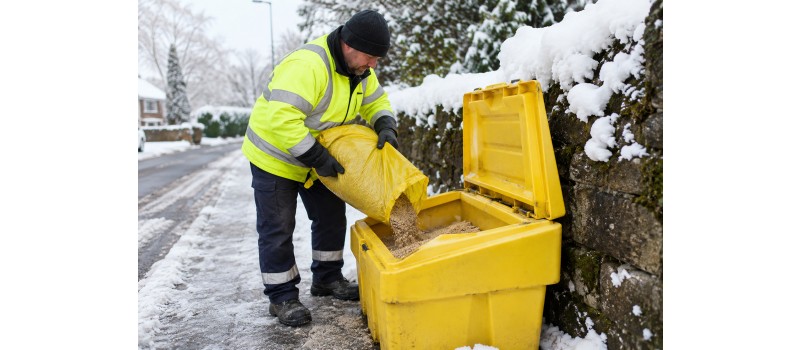
A comprehensive breakdown of when to grit, how much grit to use, what size to choose and much more
You have probably seen a yellow grit bin on the pavement at some point in your life, but you might not have seen it used, and so never thought about what they are, or the purpose they serve.
Though easy to miss, grit bins serve a crucial function for councils and individuals alike, keeping roads and pavements safe for everyone. Therefore, as the weather turns colder, it is well-worth understanding what they are, how to use them, where to find them, and the options available if you’re looking to purchase one.
In this guide, you will find:
- What is a grit bin and what is it used for?
- Who owns council grit bins, and can the public use them?
- Where can I find my nearest grit bin?
- When should grit or rock salt be used?
- How much grit should you use, and how do you spread it?
- Should I buy my own grit?
- What size grit bin do I need?
- What type of grit bin should I choose?
- Where should grit bins be positioned?
- How many grit bins does a site need?
- Common grit bin FAQs
What is a grit bin and what is it used for?
Grit bins are boxes placed on the side of the road by councils and local authorities that contain grit for spreading on icy or slippery surfaces. As for what is in a grit bin, usually they store store rock salt, which lowers the freezing point of water on surfaces and improves traction on public roads or footpaths.
This is what most grit is made from in the UK, but sometimes you might also see white rock salt used in more extreme cases, which melts the ice cleanly without leaving a messy, slushy trail. This is especially useful around commercial or public and private entranceways, where you don’t want high levels of footfall to track brown sludge indoors.
- Read here for more information on rock salt and grit
Who owns council grit bins, and can the public use them?
Grit bins are usually placed in easy-to-access locations by your local council or local authority responsible for highways. Some local authorities supply yellow grit bins to care homes, schools, colleges and other public building as part of a service agreement.
While councils might also use gritting vehicles to clear main roads and busy areas, grit bins are distributed in the hope that the public will get involved and distribute grit in shared roads and pavements.
This is especially true in suburban neighbourhoods, where it’s not always possible to get a large gritting truck.
However, that doesn’t mean you can use grit from public bins on your driveway. Public grit bins are not intended for private use, so for that you would need to buy a grit container.
- Click here to browse our extensive range of grit bins and salt, where you’ll find everything you need all in one place: grit bins, rock salt and de-icing, salt spreaders, winter packs, shovels and more accessories.
Where can I find my nearest grit bin?
Grit bins are usually located near a sharp bend, junction, steep hill or residential area, and that area may have a high proportion of elderly residents. But if you haven’t noticed one in your local area, usually local authorities provide interactive locators for the nearest grit bin.
If you visit your local authority’s website, you may find a searchable map tool where you can either enter your postcode or search a map to see precise locations.
If you’re interested in requesting a grit bin for your area, there is usually a formal application process via your local authority’s website. However, because grit bins cost tax money, your request won’t necessarily be approved.
If your local grit bin is damaged or empty, you can notify your local authority via a helpline number or an online form.
When should grit or rock salt be used?
As a rule, you should always grit before ice or snow forms. In the event of unexpected snowfall, make sure to move the snow aside before applying the grit, and for unexpected ice always apply more than you usually would when pre-treating an area.
You’re more likely to avoid being caught short by gritting at the right time of day and at the right temperature. Generally, the best time to treat roads or pavements is late afternoon or early evening, before the temperature drops enough for frost to form.
Rock salt works best at around 1 degree Celsius and down to -5 degrees Celsius. Anything lower than this, and standard rock salt starts to lose its effectiveness. When you’re down to -8 or -9, it doesn’t really help at all.
If you’re planning ahead of winter, now is the ideal time to stock up on grit, as you want to fill your bin before the frost comes, not during a cold snap.
How much grit should you use, and how do you spread it?
For a standard level of ice, you should use about 20 grams of rock salt per square metre, which equates to roughly one tablespoon or a small handful (but never spread salt with your bare hands, as it can irritate the skin). If, however, the snow is heavy or temperatures drop rapidly, you can double this to 40 grams.
Don’t be tempted to use too much rock salt, though. Using an excessive amount won’t melt the ice any faster, but it will waste money. More still, you risk blocking domestic drains and staining driveways.
Resist the urge to spread great heaps of grit onto the road or pavement. Instead, use a small plastic garden trowel, a clean dynamic scoop, or a handheld shaker. You could also double-up on kit by using a snow shovel to spread grit after you’ve cleared a path.
- Explore our range of salt spreaders and accessories here
While there is no fixed rule on how often you should reapply grit, generally a single layer can remain active for 24 to 48 hours. But you need to watch out for changing conditions.
If it rains heavily or the snow melts after you’ve gritted, and you expect that water to freeze and create dangerous black ice, make sure you’re out and ready to re-treat the area as soon as you’re able – ideally when the rain stops, or before the temperature drops again.
Read here for more information on salt spreading this winter.
Should I buy my own grit bin?
Buying a grit bin for your domestic or professional property depends on your level of need. If you have additional risks like a long or steep driveway, elderly family members or young children, then it would be a sensible idea.
Grit can help you tackle patches of ‘black ice’ on your driveway if you live in a hilly area or on an unadopted road. Black ice is deceptive, as ice forms as a glazed, transparent layer that is hard to see and even if you can’t see the ice, gritting surfaces during icy weather can prevent slips and accidents from occurring.
What size grit bin do I need?
If you opt for getting a grit bin, and depending on where you need it, below is a handy chart you can reference when making your decision:
|
Bin size |
Cu ft |
Approx. salt capacity |
25kg bags for a full fill |
Typical use |
|
50–60 litres |
2 |
50–65kg |
2 |
Doorsteps, driveways |
|
110 litres |
3.5 |
110kg |
4 |
Paths, small car parks |
|
175 litres |
6 |
175kg |
6–7 |
Entrances, small car parks |
|
200 litres |
7 |
200kg |
8 |
Most commercial sites |
|
350 litres |
12 |
350kg |
14 |
Large car parks |
|
400 litres |
14 |
400kg |
16 |
Schools, slopes, large sites |
Note: Bag counts assume the bin is filled to capacity with 25kg bags. Actual capacity varies by model, so be sure to check the individual product page
What type of grit bin should I choose?
The answer to that question will depend on your requirements. At Kingfisher Direct, we have a range of grit bins for every need, including lockable, recycled, yellow and black options.
Discover the full range of grit bins here.
Where should grit bins be positioned?
You should consider placing grit bins in any and all of the following high-traffic areas:
- Car parks
- Slopes
- Entrances
- Loading areas
- Paths
- Private roads
- Fire exits
- Areas prone to black ice
How many grit bins does a site need?
Above we discuss what size grit bin you need, but how many depends on the site in question:
- For small entrances or residential paths, a single bin would be sufficient.
- For a mid-sized workplace or school, 1-2 bins positioned near areas of heavy footfall would be best.
- For commercial sites like car parks, 2-4 bins placed near access routes, loading bays or steep exist gradients would work well.
- For industrial hubs or town centres, you would need multiple bins of 400L+ distributed across parking networks, walkways and high-traffic areas like high streets.
Get in touch for more information
We hope this guide has given you all the information you need to make the right decision, but if you are still unsure, our team are always on hand to help and provide the expert advice you need.
Simply get in touch via email at sales@kingfisherdirect.co.uk, or by telephone on 01777 858009, to discuss the right grit bin for your property.
Common grit bin FAQs
Can grit bins be left outside all year round?
Yes. Most commercial grit bins are designed for permanent outdoor use, typically using weather-resistant polyethylene. Keep the lid closed and inspect the bin periodically for damage, standing water or contamination. Positioning it on a firm, level surface will also help keep the contents dry and accessible.
How often should a grit bin be checked and refilled?
Check grit bins regularly throughout winter and before freezing weather is forecast. Higher-use sites such as schools, warehouses and car parks may need more frequent checks after each period of snow or ice. Before winter, check the bin, lid and contents and make sure there is enough grit or rock salt available for expected use.
Can water or moisture damage the salt inside a grit bin?
Moisture can cause rock salt to clump or dissolve, making it harder to spread evenly. Keep the lid firmly closed and replace or dry out contaminated material where necessary. A well-designed grit bin should help protect its contents from rain and snow.
How long can rock salt be stored in a grit bin?
Rock salt can generally be stored for long periods if it is kept dry and protected from contamination. It does not have a short shelf life in the same way as many other products, but moisture can cause it to harden or clump. Check older stock before winter and break up or replace material that can no longer be spread effectively.
Should grit bins be lockable?
Not always, but a lockable grit bin can be useful where theft, misuse or unauthorised access is a concern. This can be particularly relevant for schools, commercial premises and publicly accessible sites. However, ensure authorised staff can access any lockable grit bins quickly when freezing conditions are expected.
Can rock salt damage concrete, paving or other surfaces?
Repeated or excessive use of de-icing salt can contribute to deterioration of some concrete, masonry, metals and surrounding materials, particularly where surfaces are already damaged or porous. Use only the amount required, spread it evenly and consider the surface manufacturer's guidance where there are concerns about compatibility.
Is rock salt safe to use around pets and vegetation?
Rock salt should be used carefully around animals and planted areas. High concentrations can irritate paws and may damage grass or plants if salt accumulates in the surrounding soil. Avoid unnecessary over-application and keep stored salt inaccessible to animals.
Have you ever wondered, “What are the yellow boxes on the pavement?” All drivers and pedestrians will have noticed grit bins but will most likely not have seen them being used or understood why they are essential pieces of equipment for councils and individuals to own. Grit bins are boxes that are placed by the side of the road by councils or local authorities that contain grit for spreading on icy or slippery communal surfaces.
Our grit bin guide includes everything you need to know about grit bins, how to find and use them, where to buy grit bins, and how to understand the contents and management of council grit bins. First, we’ll review the basics of grit bin ownership and grit bin usage.
Who owns the yellow boxes on the pavement and can I use them?
What features you should look for when buying a grit bin
Where can I find grit bins near me?
Who owns the yellow boxes on the pavement and can I use them?
Most local authorities in the UK place yellow grit bins on pavements in easy-to-access locations. This is particularly true of councils that act as the location’s highway authority and supplement the work done by those councils in gritting the roads in colder months.
Though the local authorities may use gritting vehicles and have personnel to check on road surfaces, they also hope the public will get involved and treat shared roads and pavements.
However, the expectation is that the public will only use the contents of council grit boxes for communal spaces and not for private driveways or paths.
Below, we cover some commonly asked questions regarding grit bins and how to find and use them.
Grit bin FAQs
Who owns the yellow grit bins at the end of the road?
Yellow grit bins are usually the property of your local council or the local authority responsible for highways in your area. Some local authorities supply yellow grit boxes to care homes, schools, colleges and other public buildings as part of a service agreement.
Where can I find my nearest grit bin?
You'll most likely find a grit bin is often placed near a sharp bend, junction, steep hill or residential area. The area may have a high proportion of elderly residents.
If you haven’t noticed any grit bins in the locations mentioned above, you could search for “grit bins near me” in a search engine or visit your council’s website to find the locations of local grit bins.
If you’re a homeowner and wish to discuss which grit bin to purchase for your property, Kingfisher Direct are on hand to advise you via email or telephone.
Can I take grit from the bin for my driveway?
The short answer is no. Yellow grit bins along public roads or around some buildings are not intended for private use. You need to buy a grit container if you need to use grit at your home or business.
What happens if I take too much grit or use it in the wrong place?
Using grit, salt, or a combination of both, can be a crucial road safety measure and a way to make car parks, roads and pavements safer. However, too much grit can become a problem and a buildup may prevent water from draining on the surface. The contents of council grit bins can also risk blocking domestic drains and staining driveways, such as brickweave or resin, so be sure to keep the council grit away from your property’s driveway and drainage system.
How do I report a damaged or empty yellow grit bin?
Local authorities have systems in place so you can notify them of any grit bin issues in your local area, such as helpline numbers and online forms. Kingfisher Direct is based in Nottinghamshire, and the county council for this area provides a webpage for community members to report damaged or empty grit bins.
What is in a grit bin?
The contents of a grit bin can include sand, salt (usually rock salt) and additives such as calcium chloride. This grit provides friction on icy surfaces. It is formulated to be harmless to the local environment and eventually integrates safely into the soil.
The de-icing salt sometimes used in yellow grit bins inhibits water’s ability to freeze solid, meaning grit is an important part of road preparation and safety when weather reports predict icy conditions.
Is it safe for my pets to walk on grit?
Though pets wouldn't come to immediate harm from walking across a gritted surface, dogs and cats may lick their paws afterwards and ingest an unhealthy amount of salt. It is highly advisable to wash or wipe the paws of a cat or dog that has been out during icy weather and act fast if you do suspect rocksalt poisoning.
Can I buy a grit bin for my property?
Buying a grit bin for your domestic or professional property is a sensible idea if you have additional risks, such as a long or steep driveway, elderly family members or young children. It is also recommended that residents living on unadopted roads find a supplier of single or small-order grit bins. Kingfisher Direct can help in these circumstances.
You can purchase compact, lockable grit bins under £50 online from Kingfisher Direct, as well as de-icing salt and scoops. Kingfisher Direct can also offer guidance on public grit bins in the local area and the type of grit bins you may need for your property.
How to use a council grit bin
If a nearby road or pavement appears to be outside the current operation of your council gritting service, or you need a quick fix for communal surfaces, then you can use the contents of a yellow grit box. You can spread grit from the box as a preventative measure before bad weather and if snow has fallen, try to move that aside before applying grit.
When using a council grit bin, a spade, shovel or thick pair of gardening gloves is needed to scatter the contents over the road or path that presents a risk. You must be vigilant and avoid standing on roads to do this, especially in poor light. If you have a hi-vis jacket, we suggest you wear this when spreading the grit or enlist the help of a neighbour so they can watch for danger while you grit the road.
Should I buy my own grit bin?
Car insurance companies have reported that serious accidents are approximately four times more likely during cold months. Visits to A&E departments in hospitals due to falls and slips multiply fivefold in those same months. We supply councils, businesses and homeowners with grit bins
Grit can also help you tackle patches of ‘black ice’ on your driveway if you live in a hilly area or on an unadopted road. Black ice is deceptive, as ice forms as a glazed, transparent layer that is hard to see and even if you can’t see the ice, gritting surfaces during icy weather can prevent slips and accidents from occurring.
If the environmental implications of having your private-use grit bin are of concern, choose a grit container made from recycled polyethylene from our range of eco-friendly storage options. Also, you will need to find the best snow shovel which could double as a grit-spreading tool.
What features you should look for when buying a grit bin
Some local authorities supply yellow grit boxes to care homes, schools, colleges and other public buildings as part of a service agreement. These can then be used to treat surfaces which could become hazardous for building users. However, these are only open to use on public property and should not be used for private driveways or pathways. However, if you're looking to buy a grit bin for your home or business, you might have different requirements and so should consider some of the following features when purchasing a grit bin.
Size and durability
If you need a workplace grit bin or live in a highly populated area, a popular option is a lockable grit bin. This option helps prevent unauthorised or inappropriate use of its contents. You can select yellow grit bins with the correct capacity and design for your premises too. Make sure you choose a grit bin that holds enough grit to cover your driveway and walkway to prevent any hazards from occurring.
Safety and handling
If you are a business, school or similar organisation, you should also conduct a risk assessment of your roads, exits, entrances, car parks and pathways. This will allow you to calculate a manageable weight and the appropriate material for your grit bin.
Homeowners looking for private-use grit should consider purchasing a grit bin that comes with the necessary tools to grit their walkways safely and efficiently. For instance, our winter kits work well for both public playgrounds and large, privately owned properties. Purchasing these kits is a great way to bulk-buy quantities of grit salt, gloves, shovels and high-vis vests, thus minimising the risk of injury when gritting hilly or troublesome surfaces.
Assembly and aesthetics
If your business operations involve heavy vehicle or foot traffic, such as company fleets or delivery trucks, it makes sense to find a supplier of heavy-duty grit bins, delivered with a large quantity of specialist salt and grit spreading equipment. This includes our winter car park kit, complete with equipment such as an easy-to-use grit spreader, a manual snow plough, snow shovels and three yellow grit bins for car parks and private roads.
When purchasing grit bins for commercial premises or home use, we offer alternatives to yellow grit bins. For instance, our household grit bin is one of several outdoor storage containers available in a variety of colours.
Cost
Overall, purchasing a single grit bin or a grit bin kit needs to be worthwhile, and purchasing the correct size and material will depend on its intended usage. Finding the right balance between your budget and the required features is essential when deciding which grit bin to purchase.
When conducting a risk assessment, consider rating the essential and secondary features you want your grit bin to provide. For example, if your grit bin will be placed next to a road, consider purchasing a grit bin kit with high-vis and lockable features to ensure maximum safety. If, however, you only need to grit your private driveway, a smaller grit bin with a spout attachment could be a great option.
Ultimately, ease of use and durability will determine which grit bin you purchase, so think carefully and feel free to contact us if you need more advice on which grit bin product is best for you.
Where can I find grit bins near me?
Kingfisher Direct offers a range of grit bins available to buy online, including council grit bin models and the best grit bins for home or business use. It’s important to buy from a trusted and expert provider when purchasing safety equipment, so get in touch via email at sales@kingfisherdirect.co.uk, or by telephone on 01777 858009, to discuss the right grit bin for your property.
However, to find your nearest public-use grit bin, visit your local council website. Unfortunately, that information is not always available or up to date. So, if you have concerns about a localised risk, contact your local council for advice and consider investing in a dedicated grit bin for your own driveway or work premises to keep motorists, cyclists and pedestrians safe in icy weather.
